Best white wine for cooking
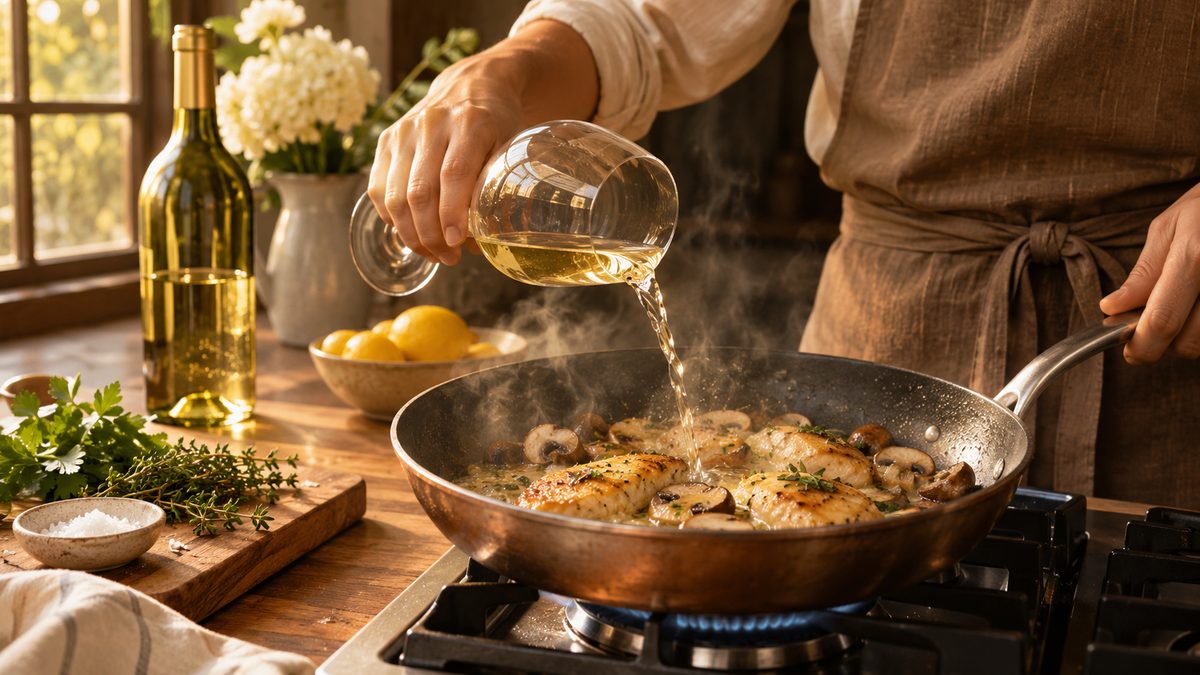
The best white wine for cooking is a dry, crisp white with bright acidity and little or no oak, such as Pinot Grigio, Sauvignon Blanc or an unoaked Chardonnay. Grab the wrong bottle, though, and it shows: a sweet or heavily oaked wine turns a pan sauce cloying or bitter, and the expensive bottle you splurged on mostly boils away. This guide gives you the right white for each dish, the three styles to skip, and how little you actually need to spend.
What is the best white wine for cooking?
The best white wine for cooking is a dry, unoaked white with high acidity, like Pinot Grigio, Sauvignon Blanc or an unoaked Chardonnay. Acidity is the whole point: it brightens sauces and cuts through butter, cream and fat.
A dry style matters because sugar concentrates as wine reduces, so a sweet wine can turn a savoury sauce cloying. Oak is the other trap. When an oaky wine cooks down it leaves bitter, woody notes, so a clean, crisp white is the safest all-rounder.
The 9 best white wines for cooking, by dish
Any dry white you would happily drink will work, but a few styles pull their weight again and again. Here is what to reach for, and what each one is best at.
| Wine | Style | Best for |
|---|---|---|
| Pinot Grigio | Light, neutral, high acid | The everyday all-rounder: pan sauces, seafood, risotto, chicken |
| Sauvignon Blanc | Crisp, herbal, citrus | Chicken, fish, mussels, anything with lemon or fresh herbs |
| Unoaked Chardonnay | Rounder, textured | Cream and butter sauces, risotto, chowder, Alfredo |
| Dry Vermouth | Fortified, keeps for weeks | The pro secret: a splash in almost any savoury sauce |
| Muscadet | Bone-dry, saline | Shellfish, mussels, moules mariniere, clams |
| Dry Riesling | High acid, citrus | Pork, and Thai or Asian-leaning dishes |
| Albarino | Zesty, saline | Seafood, paella, white fish |
| Verdejo | Crisp, grassy | Green vegetables, asparagus, herby sauces |
| Soave | Dry, gentle, almond | Delicate risotto, poaching, light cream sauces |
Notice the pattern: lean, zesty whites for lean foods (fish, chicken, greens) and a slightly rounder white once cream, butter or cheese joins the pan.
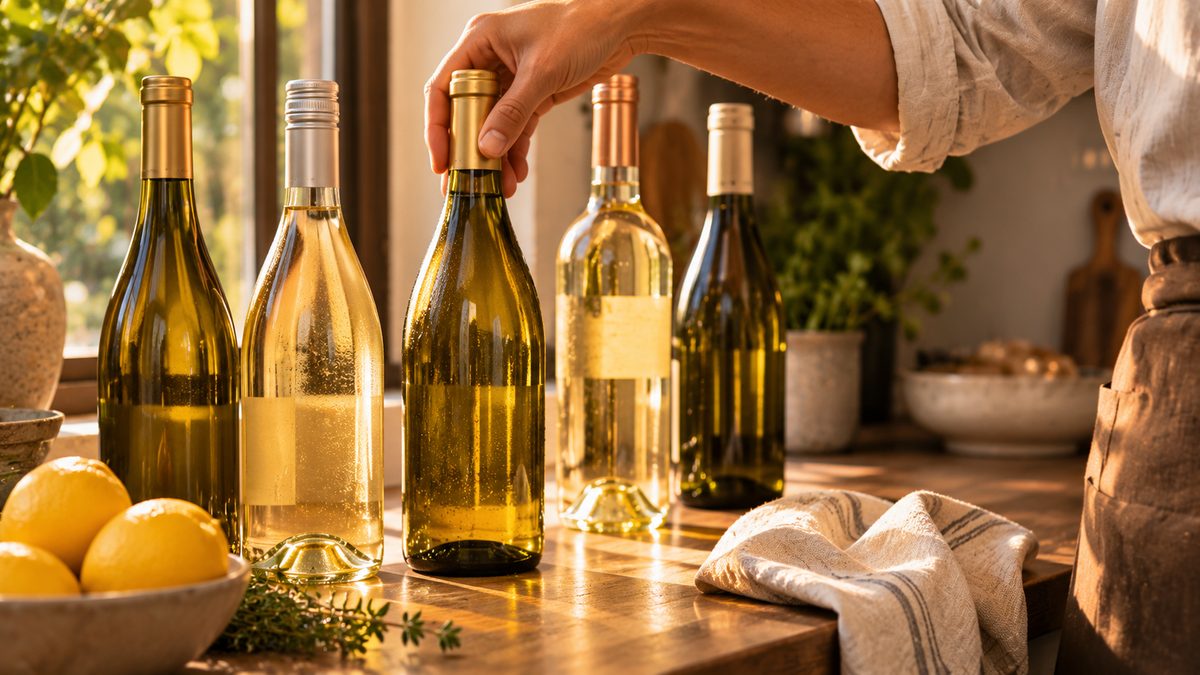
What white wine should you avoid for cooking?
Three styles cause most kitchen disappointments. Skip them and you have solved 90 percent of the problem.
- Sweet wines (Moscato, off-dry Riesling, sweet blends). The sugar concentrates as the wine reduces and can make a savoury sauce taste candied.
- Heavily oaked Chardonnay. That buttery, toasty character turns bitter and hollow when it cooks down. Reach for the unoaked version instead.
- Supermarket "cooking wine". It is loaded with salt and additives to extend shelf life, the flavour is poor, and the added sodium throws off your seasoning.
Can you cook with any white wine?
More or less, yes, as long as it is dry. The old rule still holds: if you would not drink it, do not cook with it, because cooking concentrates flavours rather than hiding them.
You do not need to match the exact bottle you will serve at the table, though. A simple, clean, dry white is plenty for the pan.

How much wine do you need, and does it have to be expensive?
For most sauces you need a splash to half a cup. A $10 to $15 bottle is more than enough, and often a $9 one is indistinguishable once it has reduced into a dish.
Spend your money on the wine in your glass, not the wine in your pan. The heat strips away the delicate aromatics you pay extra for anyway.
Does the alcohol cook off?
Not entirely, which surprises most people. According to USDA data on nutrient and alcohol retention, a dish still holds roughly 5 percent of its original alcohol after about 2.5 hours of simmering, and a quick flambe can leave about 75 percent behind.
So the longer and hotter you cook, the less alcohol remains, but a short deglaze keeps a fair amount. Worth knowing if you are cooking for anyone who avoids alcohol.
The bottom line
For almost any savoury dish, a dry, unoaked, high-acid white is the right answer, and Pinot Grigio or Sauvignon Blanc will rarely let you down. Keep it cheap, keep it dry, lean crisp for lean food and rounder for cream, and skip anything labelled "cooking wine". Do that and the wine quietly makes the dish better, which is the whole job.
Know any wine in seconds
Scan any label with Grappi to get the grape, region, style and a clear 0 to 100 score, then the perfect wine for any meal. Free to use, works offline.