By the Grappi team · Updated November 2026 · 6 min read
The best red wine for cooking is a dry, medium-bodied red with moderate tannin, like Merlot, Pinot Noir or a Sangiovese such as Chianti. It adds colour, acidity and savoury depth to stews, sauces and braises without turning bitter. The golden rule is simple: if it is dry and you would happily drink it, it is good to cook with. Here is the best red for every dish, what to avoid, and how little you need to spend.
What is the best red wine for cooking?
Reach for a dry red with enough body to stand up to the dish but not so much tannin that it turns bitter as it reduces. Merlot is the all-round favourite: soft, fruity and forgiving. Pinot Noir suits lighter, more delicate dishes, and a bright Italian red like Chianti is perfect anywhere there is tomato.
What ties them together is that they are dry. The sugar in a sweet red concentrates as a sauce reduces and can throw a savoury dish off balance.
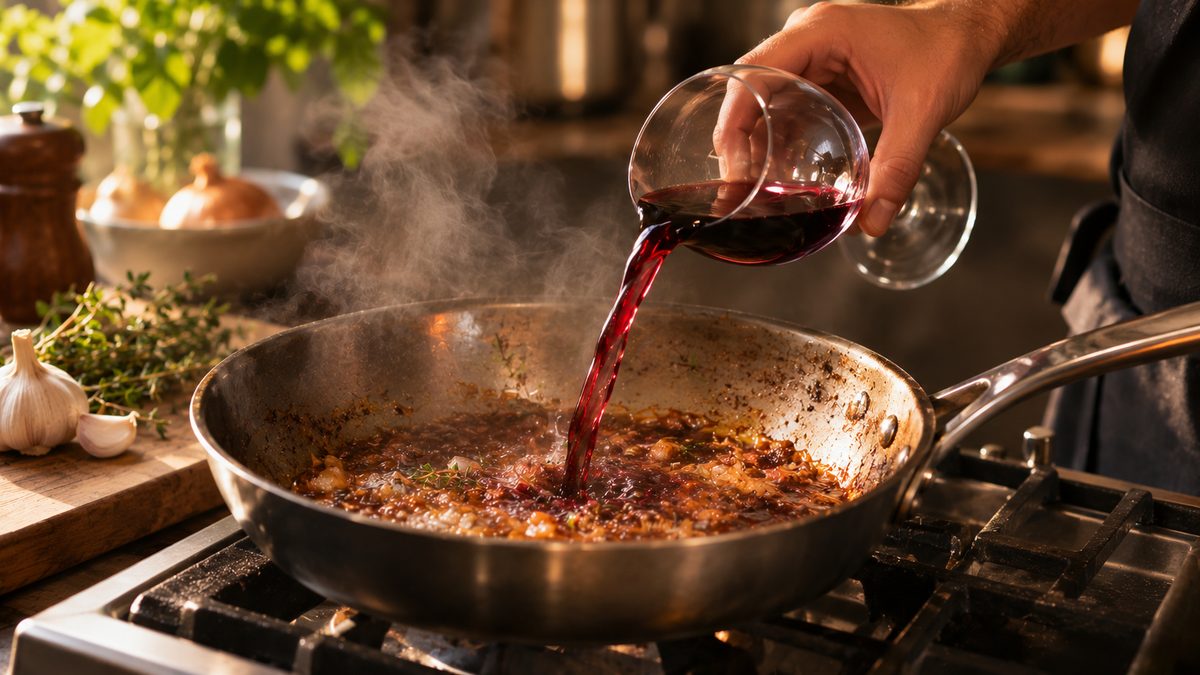
A dry, medium-bodied red adds savoury depth to a sauce without the sugar of a sweet wine that can throw a dish off balance.
Sweet reds. The sugar concentrates as the sauce reduces and can taste jammy or scorched.
Heavily oaked, high-tannin reds. Reducing them amplifies the tannin, which turns bitter and drying.
"Cooking wine" from the shelf. It is salted and poor quality. A cheap real bottle is far better.
Cook with a dry red you would actually drink: a cheap, real bottle beats the salted cooking wine on the shelf.
Red or white for cooking?
Match the colour to the dish. Red brings colour, body and a bolder, savoury depth, so it suits red meat, tomato sauces and hearty stews. White stays lighter and crisper, which suits fish, chicken and cream sauces. For the other half, see our guide to the best white wine for cooking.
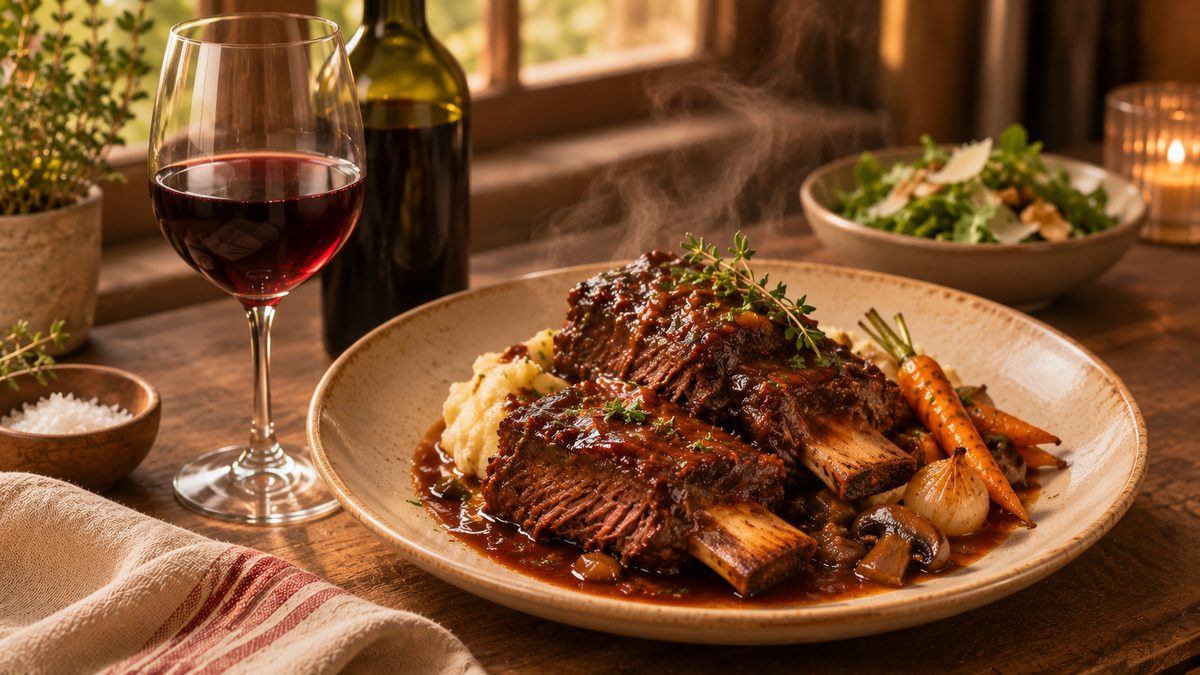
Red brings colour, body and savoury depth, so it suits red meat, tomato sauces and hearty stews.
Know any wine in seconds
Scan any label with Grappi to get the grape, region, style and a clear 0 to 100 score, then the perfect wine for any meal. Free to use, works offline.
A dry, medium-bodied red with moderate tannin, led by Merlot, Pinot Noir and Sangiovese (Chianti). They add depth to sauces and stews without turning bitter. Avoid sweet or heavily oaked reds.
Can you use any red wine for cooking?
Almost any dry red works. The rule is simple: if it is dry and you would happily drink it, it is good to cook with. Skip the sweet "cooking wine" sold near the vinegar, which is salted and low quality.
What red wine is best for beef stew or bourguignon?
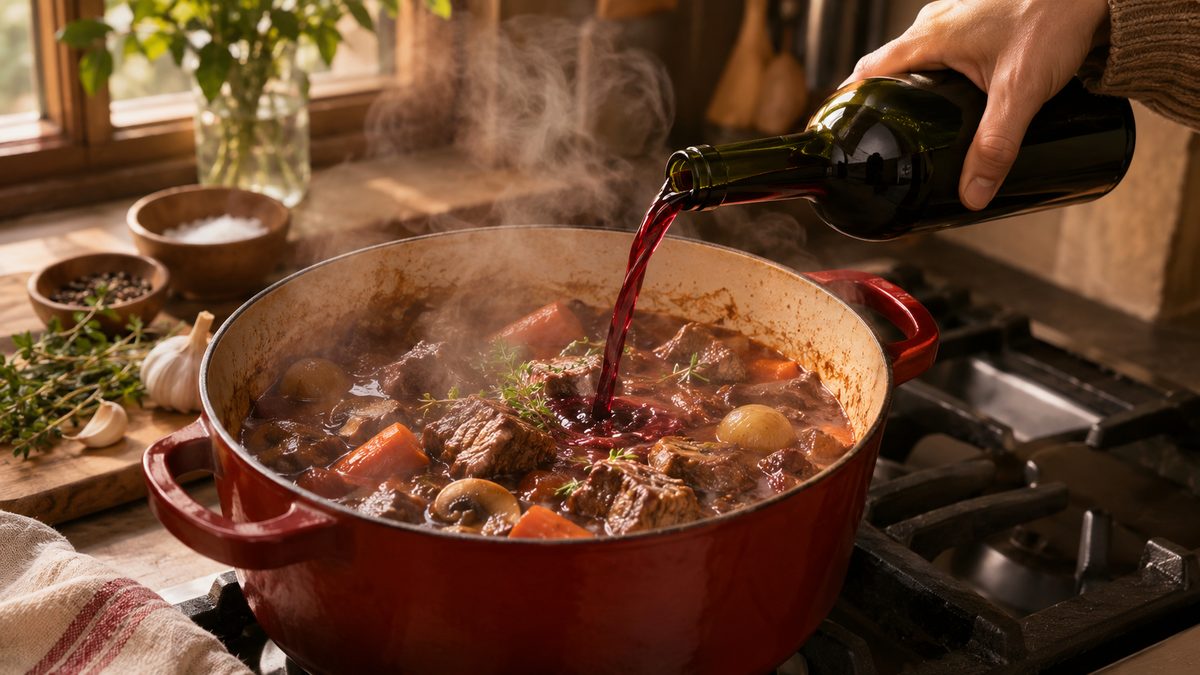
A dry, medium to full red. Pinot Noir gives a classic Burgundy stew, while a Merlot, Cabernet or Côtes du Rhône makes a richer, deeper result.
What red wine is best for bolognese or tomato sauce?
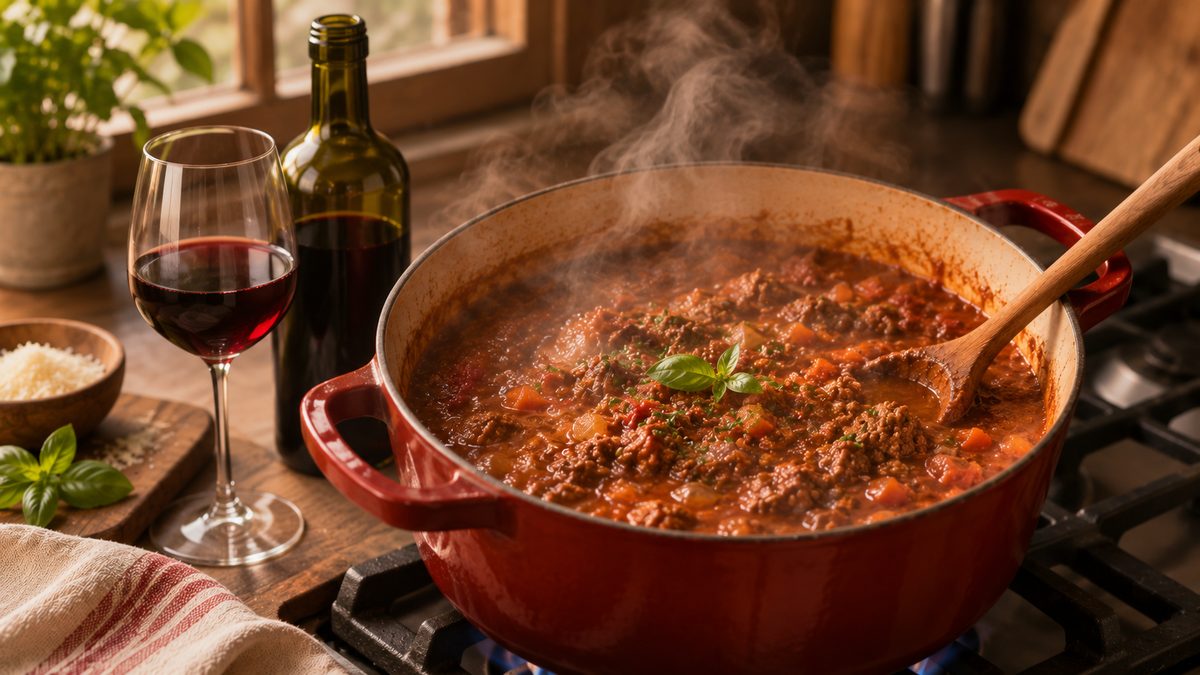
A bright, acidic Italian red such as Sangiovese (Chianti) or Montepulciano, which matches the tomato and adds savoury depth to the sauce.
Does the wine have to be expensive?
No. An 8 to 12 dollar dry red is ideal, because cooking boils off the subtlety you pay extra for. Save the good bottle for the glass.
Do you have to use dry wine for cooking?
Yes, use dry. A sweet red adds unwanted sugar that can make a savoury sauce taste off and can scorch when the sauce reduces.
Can you use red wine instead of white in cooking?
Often, but red adds colour and a bolder, more tannic flavour. Use red for red meat, tomato and hearty stews, and keep white for delicate fish, chicken and cream sauces.
What can I use instead of red wine in cooking?
For a non-alcoholic swap, use beef or vegetable stock with a splash of red wine vinegar or a little grape juice to mimic the acidity and depth.
How much red wine do you put in a sauce?
A splash to half a cup for most sauces. Add it early and let it reduce so the alcohol cooks off and the flavour concentrates.
Does cooking remove the alcohol from wine?
Most of it, but not instantly. A sauce simmered for 30 minutes keeps only a small fraction of the alcohol, and longer cooking removes more. A quick splash retains more.