Types of red wine: the 12 main styles, from light to bold
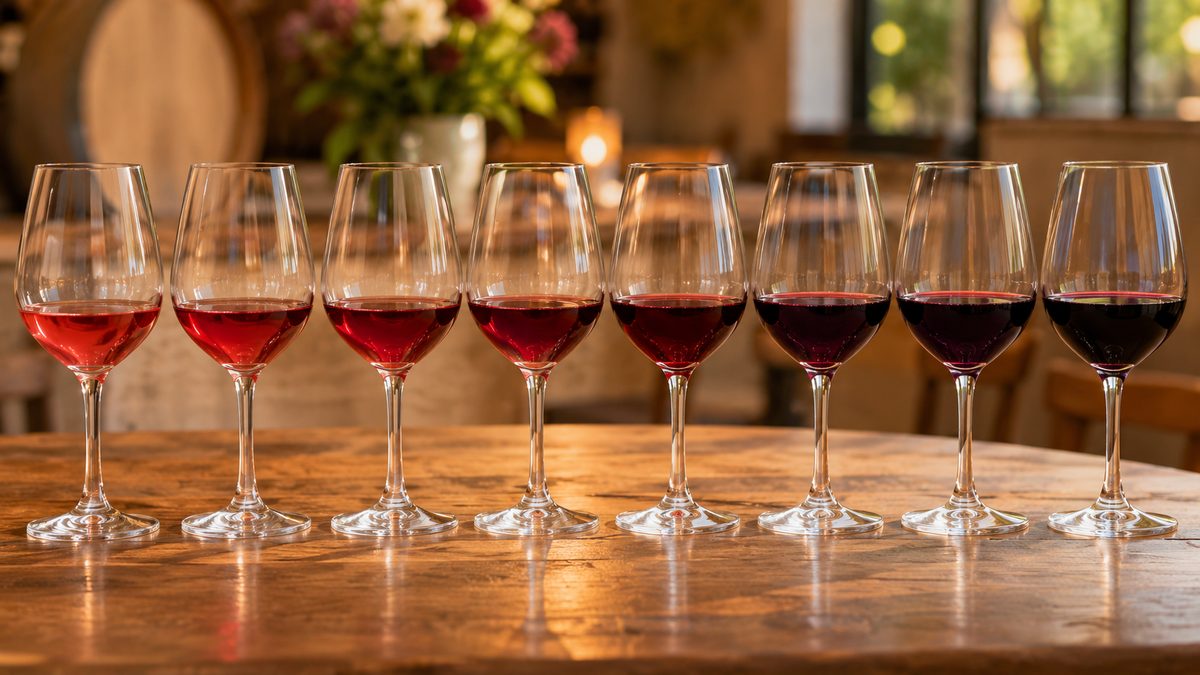
The main types of red wine are easiest to understand as a scale that runs from light and silky to full and bold. At the gentle end sit Pinot Noir and Gamay; in the middle are crowd-pleasers like Merlot, Sangiovese and Grenache; and at the bold end stand Cabernet Sauvignon, Syrah and Nebbiolo. Learn roughly a dozen core styles and you can place almost any red on a shelf or a wine list. This guide compares the 12 main types by body, tannin and taste in one chart, then tells you the best food for each.
The 12 main types of red wine, from lightest to boldest
Red wines are named after their grape, and the single most useful thing to know about any of them is where it sits on the light-to-full scale. Body tells you how heavy the wine feels, tannin tells you how firm and drying it is, and together they predict both the taste and the food it loves. Here are the 12 you will meet most often, lined up from lightest to boldest.
| Red wine | Body | Tannin | Taste | Serve | Great with |
|---|---|---|---|---|---|
| Pinot Noir | Light | Low | Red cherry, raspberry, forest floor, silky | 55 to 57 F | Salmon, duck, mushroom dishes |
| Gamay (Beaujolais) | Light | Low | Fresh red berries, banana, bright and juicy | 54 to 57 F | Roast chicken, charcuterie, picnics |
| Grenache (Garnacha) | Medium | Low to medium | Ripe strawberry, white pepper, warming | 60 to 63 F | Stews, grilled vegetables, lamb |
| Sangiovese (Chianti) | Medium | Medium to high | Sour cherry, tomato, herbs, savoury | 60 to 63 F | Pizza, pasta with red sauce, lasagna |
| Merlot | Medium | Medium, soft | Plum, black cherry, chocolate, round | 60 to 64 F | Roast chicken, burgers, pork |
| Zinfandel | Medium to full | Medium | Jammy blackberry, raisin, sweet spice | 60 to 64 F | Barbecue, ribs, burgers |
| Tempranillo (Rioja) | Medium to full | Medium | Cherry, leather, dried fig, vanilla oak | 61 to 64 F | Grilled meats, tapas, roast lamb |
| Malbec | Full | Medium to high | Blackberry, plum, cocoa, plush | 63 to 65 F | Steak, grilled red meat |
| Syrah / Shiraz | Full | High | Blackberry, black pepper, smoke, bold | 63 to 65 F | Peppered steak, game, ribs |
| Cabernet Sauvignon | Full | High | Blackcurrant, cedar, mint, firm | 63 to 65 F | Steak, lamb, hard cheese |
| Nebbiolo (Barolo) | Full | Very high | Rose, tar, red cherry, austere | 63 to 65 F | Braised beef, truffle, aged cheese |
| Petite Sirah | Full | Very high | Blueberry, dark chocolate, inky, dense | 63 to 65 F | Brisket, barbecue, stews |
Read the table top to bottom and you can feel the arc: the reds get darker, firmer and more savoury as you go, while the food they flatter gets richer and more robust.
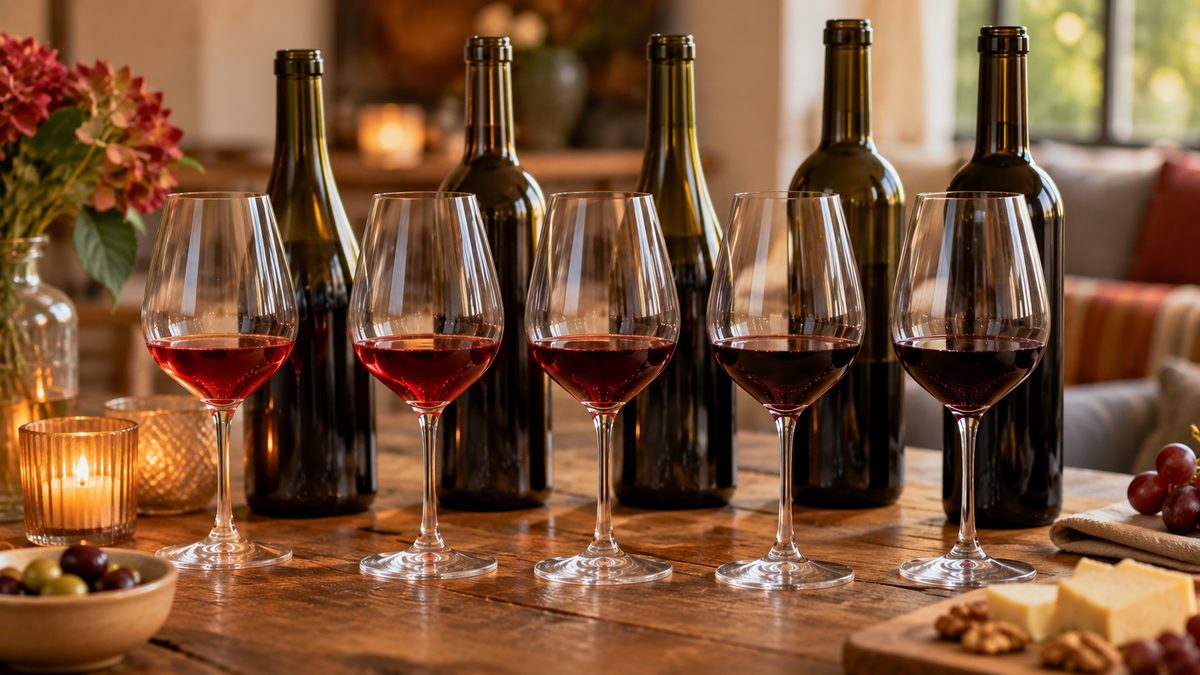
Types of red wine and their tastes
Grouping the styles by body is the fastest way to learn their tastes, because wines in the same band behave in similar ways at the table.
Light-bodied reds
Pinot Noir and Gamay are pale, translucent and gentle, with bright red fruit, low tannin and refreshing acidity. They feel more like a serious rose than a heavy red, which is why they are the one red that works with fish, especially salmon, and why they suit a slight chill. If bold reds have ever felt harsh to you, start here.
Medium-bodied reds
This is the comfortable middle where most everyday drinking lives. Merlot is soft and plummy with gentle tannin, Grenache is ripe and strawberry-sweet in flavour but still dry, Sangiovese is savoury and high in acid with sour-cherry and tomato notes, and Tempranillo adds leather and vanilla from oak ageing. These reds are the great all-rounders: enough structure for meat, enough ease for a Tuesday.
Full-bodied reds
Cabernet Sauvignon, Syrah, Malbec, Nebbiolo and Petite Sirah are the heavyweights: deep, dark and firm, with high tannin and concentrated black-fruit and spice flavours. They coat the glass, hold up to the richest food, and reward a little air in a decanter. This is the band to reach for with a char-grilled steak or slow-cooked lamb.
The smoothest red wines
Smoothness comes down to tannin, the compound from grape skins that makes a wine feel firm and mouth-drying. The lower the tannin, the softer and rounder the wine. The smoothest reds are Pinot Noir, Merlot, Gamay and Grenache, along with ripe New World Malbec, which pairs plush texture with gentle grip. If you want a red that is easy to sip on its own with nothing on the table, pick from this group.
The driest red wines
Here is the catch that confuses almost everyone: in winemaking, "dry" means the wine has little or no sugar, and nearly every red wine is already dry. What people usually mean by a dry red is one that feels firm and drying in the mouth, which is really high tannin and high acid. By that measure the driest-tasting reds are Nebbiolo, Cabernet Sauvignon and Sangiovese. Their grip is wonderful with fatty meat, which softens the tannin, but it can feel austere on its own.
The sweetest red wines
Truly sweet reds are the exception, and they are made sweet on purpose. Port is fortified, so fermentation stops with sugar left in; red Lambrusco Dolce is lightly sparkling and off-dry; and Brachetto d’Acqui is a fragrant, gently fizzy sweet red. Do not confuse these with the many reds that taste fruity but are bone dry. Ripe Malbec, Zinfandel and Grenache are packed with jammy fruit that reads as sweetness, yet they contain almost no sugar.
Types of Italian red wine
Italy deserves its own note, because its reds are named by place as often as by grape and they are built around food. The ones to know: Sangiovese, the grape behind Chianti and Brunello, all sour cherry and savoury herbs; Nebbiolo, behind the prized Barolo and Barbaresco, pale but fiercely tannic; Barbera, juicy and high in acid with soft tannin; Montepulciano, the easy, dark everyday red of central Italy; and Primitivo, the same grape as Zinfandel, ripe and jammy from the south. Nearly all of them are made to sit beside tomato, olive oil and cured meat, which is why they taste so at home with pizza and pasta.
The best grapes for red wine
A handful of grapes are called "noble" because they make great wine in many places and show their origin clearly. For reds that means Cabernet Sauvignon, Merlot, Pinot Noir and Syrah, joined by Grenache, Sangiovese and Tempranillo as the workhorse classics of Spain, Italy and the Rhone. If you taste your way through those seven, you have met the backbone of the red-wine world and can navigate most lists with confidence.

How to choose a red wine you will like
Turn the scale into a quick decision with your own taste and the meal in front of you.
- New to red, or want it smooth: Pinot Noir or Merlot. Low tannin, easy to drink alone.
- Want bold and full: Cabernet Sauvignon, Syrah or Nebbiolo. Firm, dark and best with rich food.
- Want one red for any dinner: Sangiovese or Grenache. High acidity and moderate tannin flatter almost anything.
- Want fruity but still dry: Malbec or Zinfandel. Jammy and plush with no real sugar.
Whatever you open, serve it a little cool, give a bold red some air, and keep the rest well: see how to store wine so the second glass is as good as the first, and our guide to the best red wine for cooking for the bottle that belongs by the stove.
Health note: references to resveratrol and moderation reflect general public-health guidance, which holds that less alcohol is better for health. This article is general information, not medical advice.
Know any wine in seconds
Scan any label with Grappi to get the grape, region, style and a clear 0 to 100 score, then the perfect wine for any meal. Free to use, works offline.