Which has more calories, beer or wine?
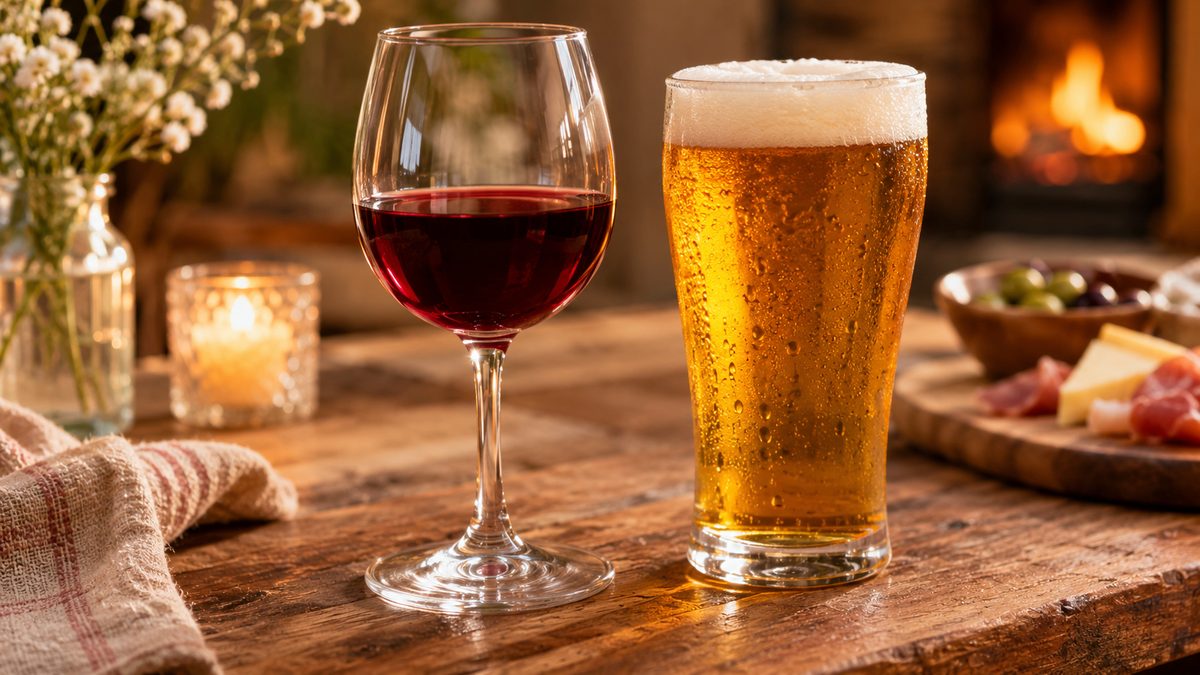
It depends on how you measure. Per standard serving, a 5 oz (148 ml) glass of wine has about 120 to 125 calories, while a 12 oz (355 ml) regular beer has about 150, so a regular beer usually has slightly more calories per drink. But ounce for ounce wine has roughly double the calories of beer, because it is far stronger, and a light beer at about 100 calories beats them both. This guide lays out beer against wine in one calorie chart, then answers what it means for weight loss.
Beer vs wine calories: the full chart
Here is how the common drinks compare at a typical serving. The figures are approximate and based on USDA and NHS values; brands and pour sizes vary, so treat them as a guide rather than a label reading.
| Drink | Serving | Calories | ABV | Carbs |
|---|---|---|---|---|
| Light beer | 12 oz (355 ml) | ~100 | 4.2% | ~5 g |
| Dry sparkling wine (Brut) | 5 oz (148 ml) | ~100 to 110 | 12% | ~2 g |
| Rose (dry) | 5 oz (148 ml) | ~120 | 12% | ~3 g |
| White wine (dry) | 5 oz (148 ml) | ~121 | 12% | ~4 g |
| Red wine | 5 oz (148 ml) | ~125 | 13% | ~4 g |
| Dry stout (e.g. Guinness) | 12 oz (355 ml) | ~125 | 4.2% | ~10 g |
| Regular beer (lager) | 12 oz (355 ml) | ~150 | 5% | ~13 g |
| Craft IPA | 12 oz (355 ml) | ~200 to 250 | 6.5% | ~18 g |
| Sweet dessert wine | 3.5 oz (103 ml) | ~165 to 230 | 15% | ~20 g |
Read the chart and the pattern is clear. Within beer and within wine, calories track alcohol and sugar: the light, low-alcohol drinks sit at the top, and the strong or sweet ones sink to the bottom.
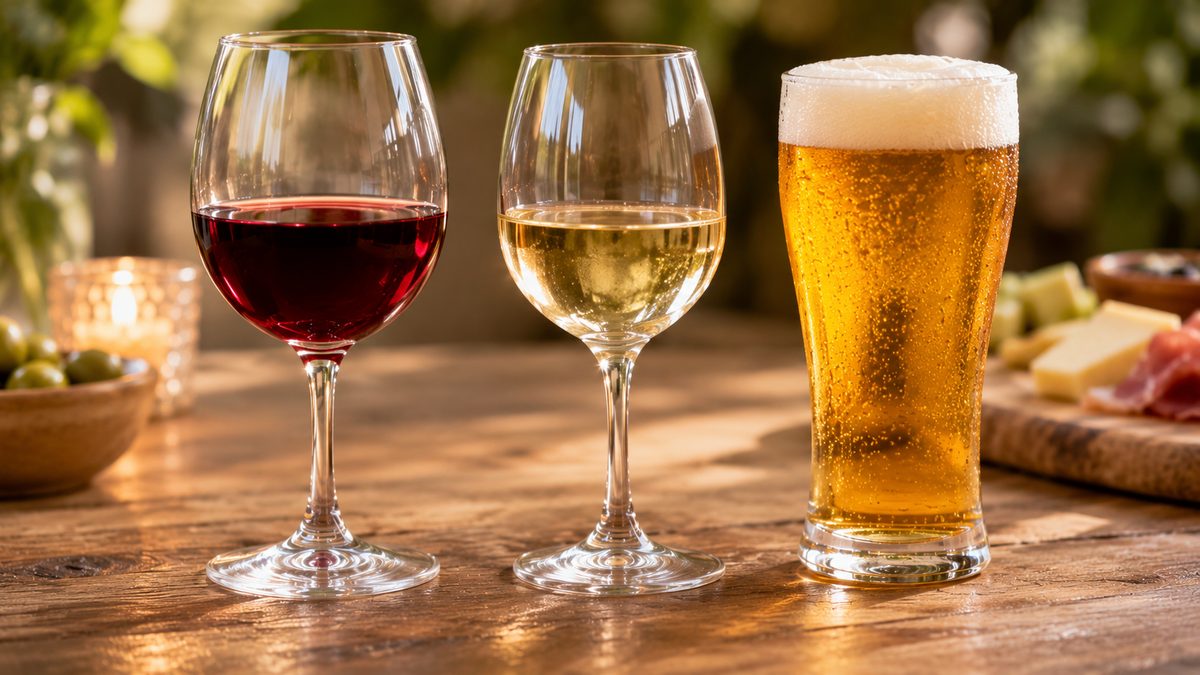
So which really has more calories, beer or wine?
There are two honest answers, and they point in opposite directions.
Per serving, regular beer usually has more. A 12 oz beer is a bigger pour than a 5 oz glass of wine, so even though beer is weaker, the larger volume brings about 150 calories against the wine's 120 to 125.
Per ounce, wine has far more. Wine is roughly 12 to 14 percent alcohol against beer's 4 to 5 percent, and alcohol is where most of the calories live. Measured by the same volume, wine carries close to double the calories of a standard beer. That is why a large, generous pour of wine can quietly outweigh a bottle of beer.
How many beers equal a glass of wine?
By alcohol, about one. A standard 5 oz glass of wine and a 12 oz regular beer each hold roughly 14 grams of pure alcohol, the definition of a single standard drink. By calories they are close too: one glass of wine is about the same as one regular beer, or about one and a quarter light beers. The common belief that a glass of wine equals two or three beers comes from oversized wine pours, not from the standard measure.
Is wine or beer better for weight loss?
Neither wins on its own. What decides it is the total number of drinks and their calories, not the colour. The lower-calorie choices are a dry, low-sugar wine, a wine spritzer topped with soda, or a light beer. The higher-calorie ones are sweet wines, strong craft beers, and anything mixed with a sugary soda or juice.
Two things make alcohol tricky for weight loss beyond the calories themselves. It is easy to lose count, because drinks go down faster than food, and alcohol can loosen willpower around late-night snacking. A simple plan helps: pick a lighter drink, pour a measured amount, and alternate each one with a glass of water.
Does beer or wine cause more belly fat?
There is no good evidence that beer specifically causes belly fat. The phrase "beer belly" is catchy but misleading: studies link overall alcohol intake, not beer in particular, to extra fat around the middle. Any alcoholic drink adds calories your body burns off before anything else, and regularly drinking more than a moderate amount, of any kind, is what tends to settle around the waist. Swapping beer for wine will not target belly fat, but drinking less of either will help.
Is it healthier to drink wine or beer?
Neither is a health food, and the gap between them is small. Red wine contains polyphenols such as resveratrol, while beer carries trace B vitamins and minerals like silicon, but the useful amounts are tiny next to the alcohol in the glass. Major health bodies now agree that less alcohol is better for health, with no level proven to be actively good for you. So the healthier move is not choosing wine over beer, it is drinking less of whichever you enjoy.

The bottom line
Beer or wine, the calories are closer than the debate suggests. A glass of wine and a regular beer land within about 25 calories of each other, wine wins by the ounce, and a light beer is the lightest pour on the table. If you are watching your intake, reach for a dry wine, a spritzer or a light beer, keep the pour honest, and remember that how much you drink counts for far more than which one you pick.
Sources: calorie, carbohydrate and alcohol figures are approximate, based on USDA FoodData Central, the NHS and the NIAAA definition of a standard drink (14 grams of alcohol); brands and serving sizes vary. This article is general information, not medical or dietary advice.
Know any wine in seconds
Scan any label with Grappi to get the grape, region, style and a clear 0 to 100 score, then the perfect wine for any meal. Free to use, works offline.