By the Grappi team · Updated November 2026 · 5 min read
Wine dregs are the lees and sediment that settle at the bottom of a bottle or glass: mostly spent yeast and grape solids, plus tannin and colour deposits in older red wine. They are harmless, if a little bitter and gritty, which is why most people leave the last splash behind or decant the bottle first. Quick crossword answer: the four-letter word for wine dregs is LEES.
What are wine dregs?
Dregs is the everyday word for whatever is left at the bottom of the bottle once the wine is poured. In wine terms, that settled matter is mostly lees, the dead yeast cells left over from fermentation, together with tiny grape solids. In older red wine you also get sediment: tannins and colour pigments that slowly bind together over the years and drop out of the liquid.
None of it is a fault. It is a natural sign that the wine was not stripped by heavy filtering, and with age it is simply what red wine does.
Lees, sediment, dregs and tartrates
People use these words loosely, but they are not quite the same thing.
Word
What it is
When you see it
Lees
Spent yeast cells left after fermentation
Young wines, and on purpose in "sur lie" wines
Sediment
Tannin and colour particles that bind and sink
Older red wines, roughly eight years and up
Dregs
The everyday word for the last, cloudy pour
The bottom of any bottle
Tartrates
Harmless crystals of tartaric acid, like tiny glass
Chilled whites and some reds, called "wine diamonds"
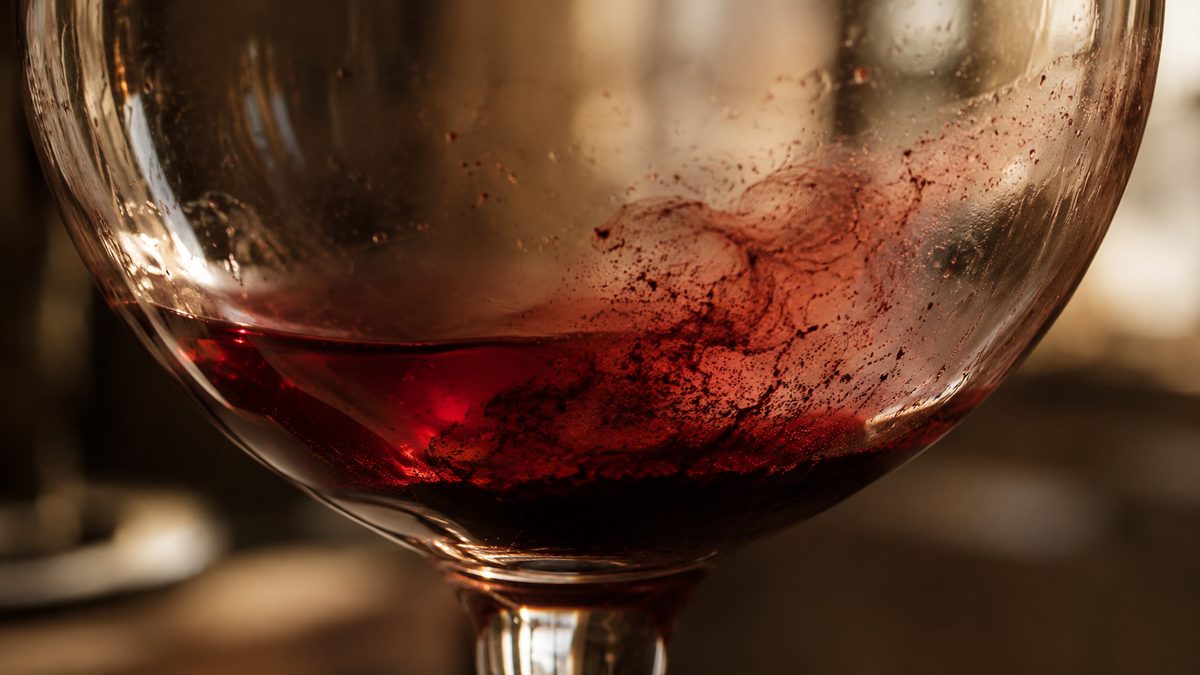
The last pour of an old red: the dark reddish-brown dregs are harmless, just bitter and gritty.
What colour are wine dregs?
In red wine the deposit is dark: reddish-brown, maroon or almost purple, because it carries the wine's colour pigments and tannin. In white wine it is paler, a faint cloudiness or a small pile of clear-to-white crystals. Both are harmless. The crystals in particular are often mistaken for broken glass or sugar, but they are just tartaric acid that crystallised in the cold.
Are wine dregs safe to drink?
Yes. Lees, sediment and tartrates are all harmless to swallow. The only reason to avoid them is taste and texture: they are bitter, chalky and gritty, and they cloud the glass. That is why you stop pouring before the sediment slides out, or decant an old bottle first.
How to keep dregs out of your glass
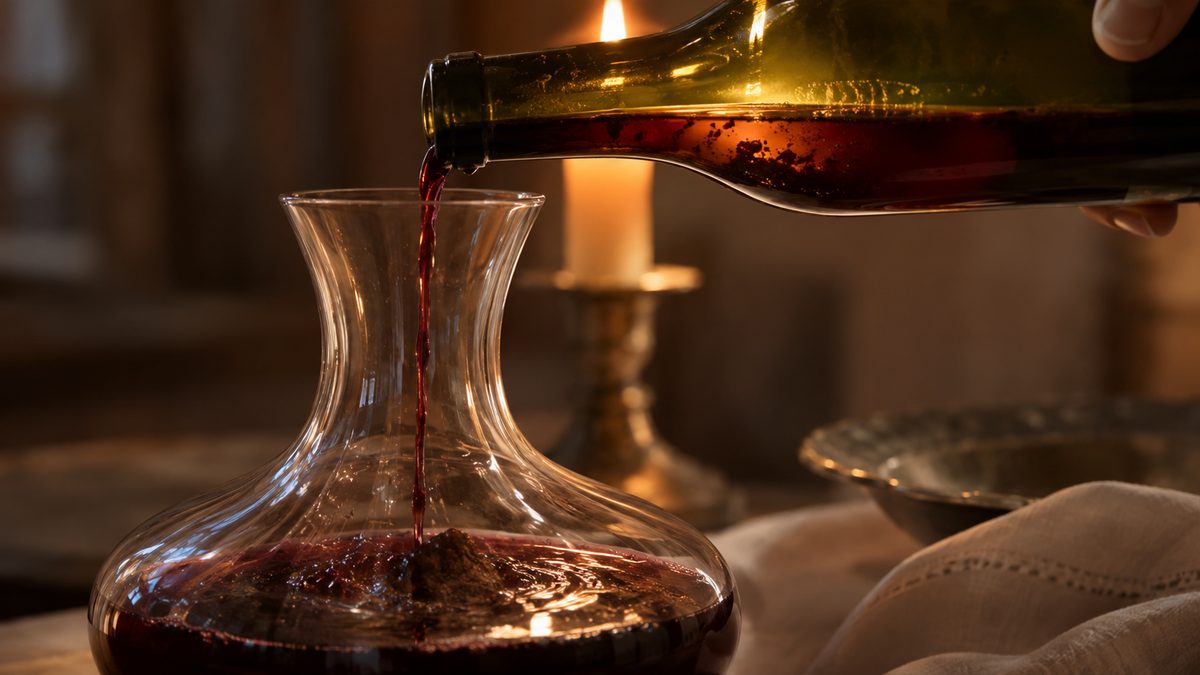
For a young wine, a careful pour is enough. For an older red with real sediment, decant it: pour the wine gently into a carafe, watching the shoulder of the bottle against a light, and stop when the murky part arrives. A coffee filter or clean muslin catches the finest particles if you want a crystal-clear glass.
Decanting an aged red: pour slowly and stop when the cloudy sediment reaches the neck.
When winemakers want the lees
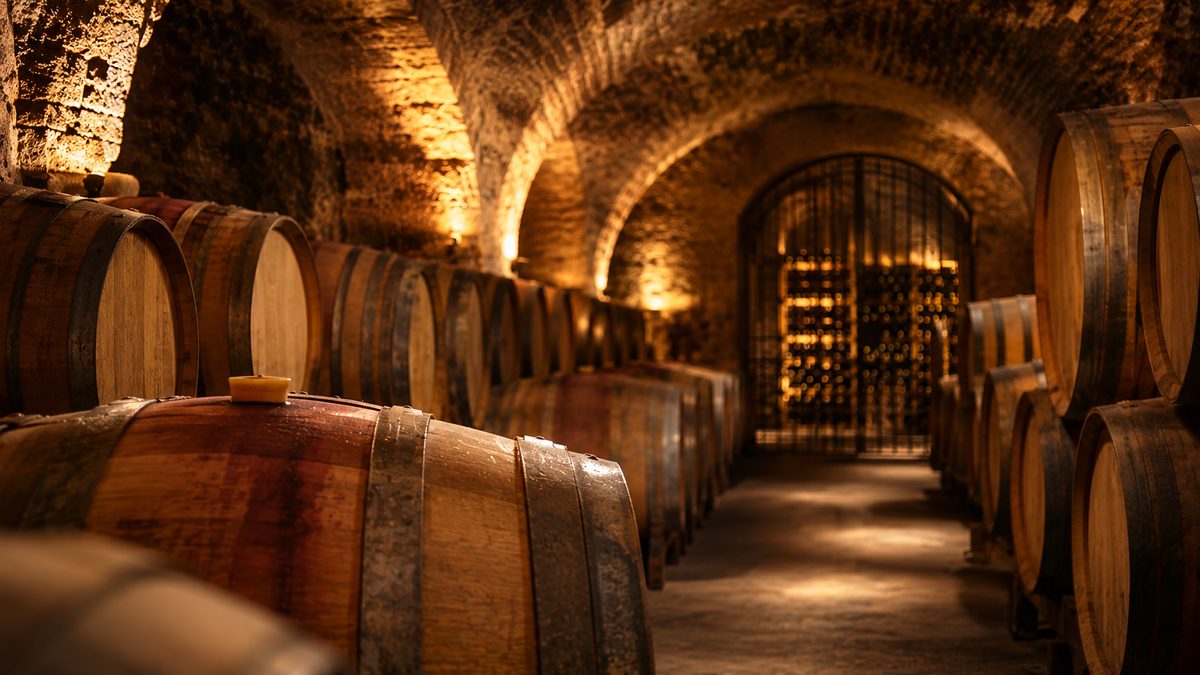
Dregs are not always something to pour away. Many wines are aged on the lees on purpose, a technique called sur lie, because the spent yeast adds body, a creamy texture and bready, savoury flavour. Muscadet Sur Lie is named for it, most Champagne and traditional-method sparkling wine is built on it, and many fuller Chardonnays use it too. So the same stuff you leave in the bottle is, earlier in the wine's life, part of what makes it taste good.
Aging on the lees: the same spent yeast you leave in the bottle gives many wines their body and depth.
Know any wine in seconds
Scan any label with Grappi to get the grape, region, style and a clear 0 to 100 score, then the perfect wine for any meal. Free to use, works offline.
Wine dregs are the lees and sediment that settle at the bottom of a bottle or glass. They are mostly spent yeast from fermentation plus tiny grape solids, and in older red wine also tannin and colour particles. They are natural and harmless, just bitter and gritty to drink.
What is the 4-letter crossword answer for wine dregs?
LEES. It is the wine word for the spent yeast and sediment left at the bottom of a cask or bottle. If your grid needs a different length, common answers for dregs are SEDIMENT, DEPOSIT or RESIDUE.
Are wine dregs the same as lees?
Almost. Lees specifically means the dead yeast cells left after fermentation. Dregs is the everyday word for everything that collects at the bottom, which is mostly lees but can also include tannin and colour sediment in aged red wine.
Is it safe to drink wine sediment?
Yes. Lees, sediment and tartrate crystals are all harmless to swallow. People avoid them only because they taste bitter and chalky and cloud the glass, not for any health reason.
What colour are wine dregs?
In red wine the deposit is dark reddish-brown, maroon or nearly purple, because it carries the wine colour and tannin. In white wine it is a pale cloudiness or small clear-to-white crystals. All of it is harmless.
Why does my wine have sediment at the bottom?
Two reasons. Young or unfiltered wines keep some lees from fermentation. Older red wines, roughly eight years and up, naturally drop sediment as tannins and colour pigments bind together and sink over time. It is a sign of age, not a fault.
What are the crystals in my wine?
They are tartrates, sometimes called wine diamonds: harmless crystals of tartaric acid that form when wine gets cold. They look like sugar or tiny glass but are tasteless and safe, and are most common in chilled white wine.
What does sur lie mean?
Sur lie is French for "on the lees". It means the wine was aged in contact with its spent yeast on purpose, which adds body, a creamy texture and savoury, bready flavour. Muscadet Sur Lie, Champagne and many Chardonnays use it.
How do I stop sediment getting into my glass?
Stand the bottle upright for a day so the sediment settles, then pour slowly in one motion and stop when the cloud reaches the neck. For an old red, decant it into a carafe and watch the shoulder of the bottle against a light.
What is another word for wine dregs?
Lees, sediment, deposit and residue all describe the matter at the bottom of a wine. Lees is the most specific wine term, and it is the usual four-letter crossword answer.